Chao Family History T. Y. Chao and Nyi Ya-tsung

Mr and Mrs T. Y. Chao built their vast shipping empire and unique family story in Hong Kong during tumultuous war times. On this page you will find precious photographs of banquets and celebrations where the couple made their presence.


Ship ownership 1960s onward

In the 1960s, Hong Kong emerged as a crucial entrepôt and manufacturing hub in Asia, with its shipping industry serving as the vital backbone of its economic success. The city's deep natural harbour, strategic location between East and West, and efficient port facilities made it an ideal maritime crossroads and transport hub. The shipping industry was particularly critical as Hong Kong's manufacturing boom required both the import of raw materials and the export of finished goods, especially textiles and light industrial products. The port handled an ever-increasing volume of cargo, while shipping companies like the Wah Kwong played a pivotal role in facilitating trade. This maritime infrastructure not only supported Hong Kong's export-driven economy but also provided essential connections during a period when China was relatively isolated, cocooned in internal transfiguration. The shipping industry also fostered the growth of related services such as banking, insurance, and logistics, helping establish Hong Kong as a comprehensive commercial centre. This maritime success laid the groundwork for Hong Kong's transformation into one of Asia's most important financial and trading hubs.


Having said that, the volatility of world politics was a constant risk and opportunity for the ship owners, who had to navigate a complex web of international tensions and rapidly shifting trade patterns. The Vietnam War, in particular, created both challenges and lucrative opportunities, as Hong Kong's vessels were frequently chartered to transport military supplies and civilian goods to Southeast Asia. The ongoing Cold War dynamics meant ship owners had to carefully balance their operations between Communist and non-Communist ports, while the periodic tensions between China and Taiwan created additional routing complexities. T.Y. Chao, Y.K. Pao and C.Y. Tung also demonstrated remarkable adaptability during this period, often acquiring vessels at bargain prices during market downturns and capitalising on geopolitical crises that disrupted normal shipping routes. The 1967 closure of the Suez Canal following the Six-Day War, for instance, forced ships to reroute around Africa, leading to increased demand for tonnage and higher freight rates, which Hong Kong's ship owners skilfully exploited. These political uncertainties, while risky, ultimately helped Hong Kong's shipping magnates build some of the world's largest merchant fleets, as they became adept at turning geopolitical challenges into commercial advantages.
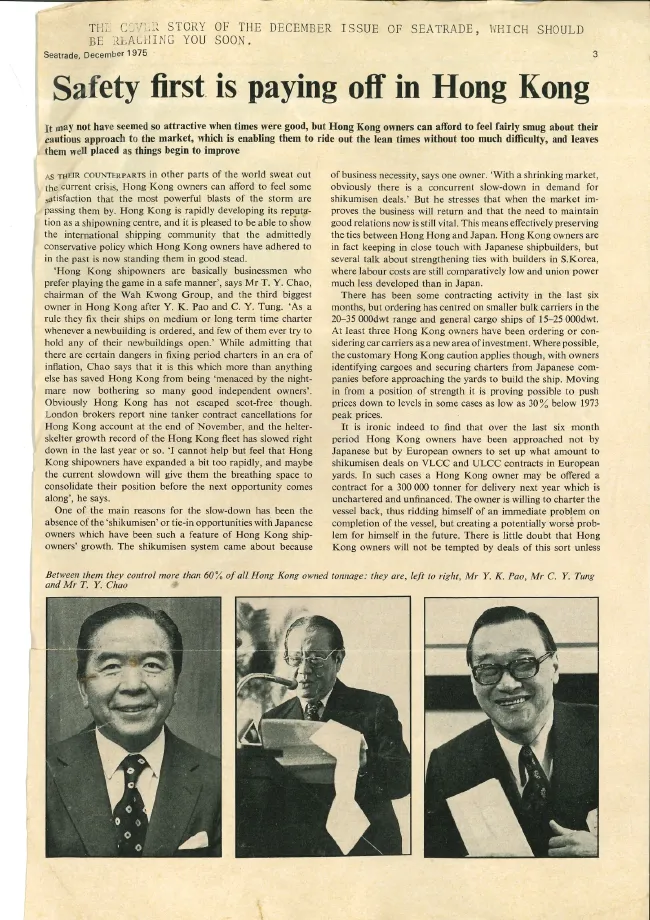
seatrade1975-page-1-1.webp

Every day was a special occasion

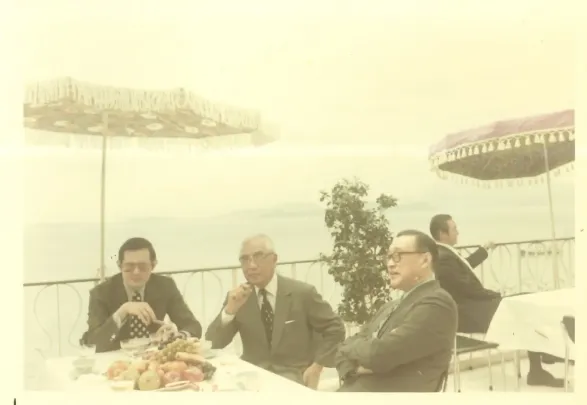
on-the-patio.webp
A party at on the patio of Wah Kwong Cottage

Close friends with Cecil, a young Stanley Ho enjoyed the seaside view as one of our guests at a table next to T.Y. Wah Kwong Cottage has since been redeveloped into Villa Cecil Phase 3 on Victoria Road.

seatrade1975-page-3-1.webp
T. Y. Chao and shipping peers

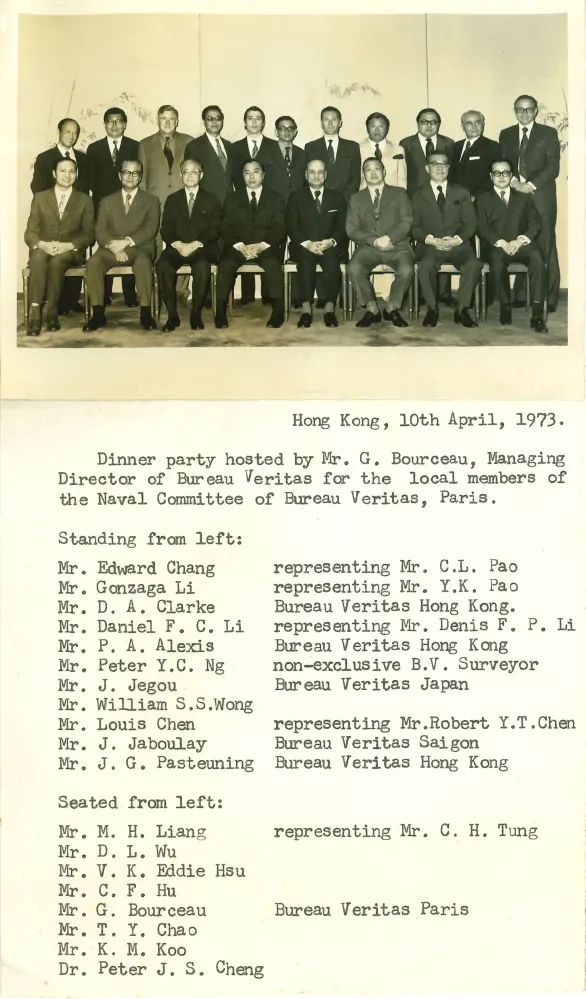
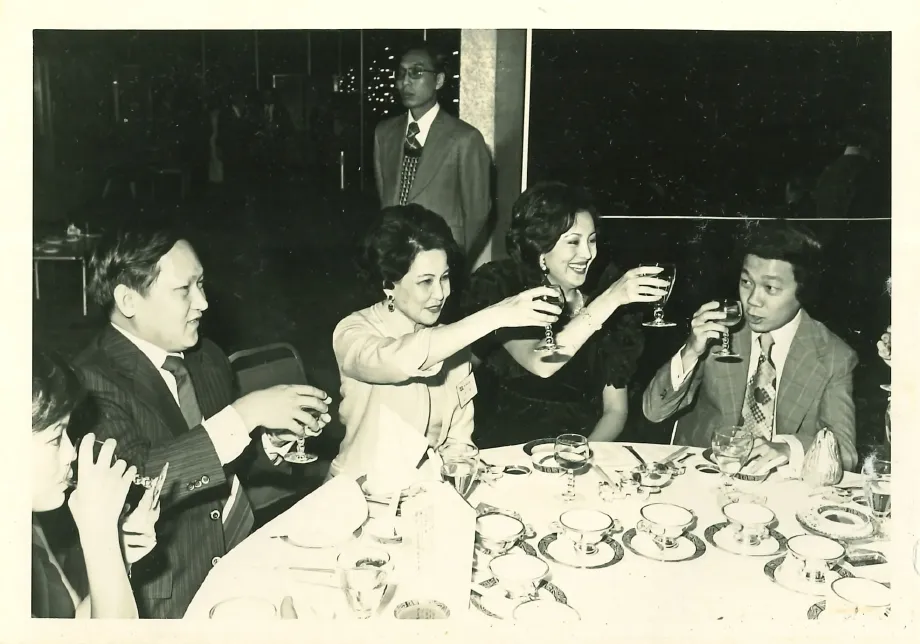
Large dinner parties happened almost everyday back in seventies Hong Kong. And it was quite common to have a professional photographer take and develop the photograph to be sent to attending guests.

tychao-banquets-page-3-copy.webp

Ship naming and launching

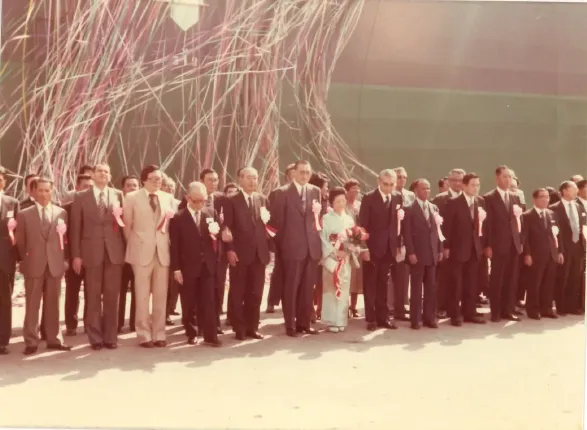
A ship launching ceremony is a time-honoured maritime tradition that marks a vessel's first entry into water. The event typically begins with the ship resting on a slipway, supported by wooden blocks and trigger mechanisms. Distinguished guests, shipyard workers, and the vessel's future crew gather alongside the hull, often under colourful bunting and flags.

The highlight of the ceremony is when a sponsor (traditionally a woman of prominence) breaks a bottle of champagne against the ship's bow while declaring "I name this ship [vessel's name]. May God bless her and all who sail in her." Following this christening, the triggers are released, and the ship dramatically slides down the slipway into the water, accompanied by sirens, ship horns, and applause from spectators. Tugboats stand ready to guide the newly-launched vessel, while water sprays from fireboats often create ceremonial arches.

The occasion is typically marked by speeches from shipyard officials and the vessel's owners, followed by a reception where maritime traditions and superstitions are carefully observed to ensure good fortune for the ship's future voyages.

shipping-peers-copy.webp

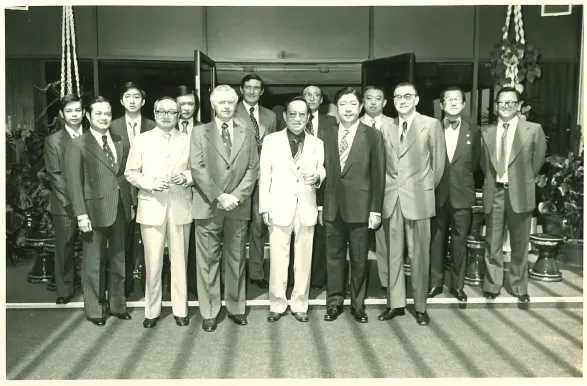
Shipping Industry Peers

Front row: (from right)

Mr. T. Y. Chao - Chairman of Wah Kwong Group

Mr. Robin Sin-Kian Loh - Director of Asia Insurance Co. Ltd. 8 Chairman of Ednasa Shipping Co. Ltd.

Mr. Chin Sophonpanich - Chairman of Asia Insurance Co. Ltd.& Chairman of Bangkok Bank Ltd.

Mr. John Potts - Chairman & President of Marine Office of America Corporation.

Mr. Frank Tsao - Director of Asia Insurance Co. Ltd. & Chairman of International Maritime Carriers Ltd.

Mr. Lau Ki Chit - Managing Director of Asia Insurance Co. Ltd.

Back row: (from right)

Mr. Robin Chan Yau Hing - Executive Director of Asia Insurance Co. Ltd. & Managing Director of The Commercial Bank of Hong Kong Ltd.

Mr. Geoffrey Yeh - Chairman & Managing Director of Hsin Chong Holdings (HK) Ltd.

Mr. C. H. Tung - Executive Director of Island Navigation Corp. Ltd.

Mr. George Chao - Managing Director of Wah Kwong & Co. (HK.) Ltd.

Mr. John Buchanan - Resident Vice President of Continental Insurance Company.

Mr. Richard Yeo - Regional Manager of Marine Office of America Corporation.

Mr. Robby Loh - Executive Director of Ednasa Shipping Co. Ltd.

Mr. C. Y. Lee - Manager of Asia Insurance Co. Ltd. 

Chao Nyi Ya-tsung

Chao Nyi Ya-tsung was the family matriarch and its foundational strength. As one of the first Chinese women to attend university in China, she was a pioneer from a family of scholars; both her grandfather and father were educated in the United States. She pursued a degree in law, and her intellectual prowess was such that she often completed her husband's university assignments for him, a fact she later recalled with humour. When political instability in China intensified, she made a deliberate choice to forgo her own studies and career to focus on her children. However, her legal and analytical mind gifted in business, the arts, and social sensitivities remained a critical asset. She worked diligently behind the scenes, reviewing all business and shipping contracts for the company her husband founded. Her expert oversight was a crucial, though private, contribution to the establishment and success of the Wah Kwong Shipping empire. She was, in every respect, the indispensable partner and steady force behind the family's endeavours.

nyiya-tsung.webp